
Life on a tight paycheck rarely fails because of motivation. Numbers often break first. Saving money on a Low Income gets easier once spending is visible, fixed costs are trimmed, and a small buffer starts growing again.
Brazil adds a few unique angles. Pix makes transfers cheap and fast, but it also makes impulse spending easier.
Social programs tied to CadÚnico can reduce essential bills, yet many households leave discounts unclaimed. A workable plan leans on routine, not willpower, and it stays realistic in weeks where nothing goes right.
Reality Check and A Simple Starting Point
Low pay creates the same trap every month: urgent costs eat the budget, then a surprise expense lands, then debt fills the gap. Breaking that cycle usually starts small. A first win might be finding R$30 of recurring charges, or stopping one overdraft fee, or keeping groceries inside a weekly cap.
Progress also needs a definition. A plan works when bills get paid on time, food stays covered, and stress drops. Bigger goals come later, once the basics stop wobbling.
Budget Basics That Hold Up Under Pressure
A budget fails when it’s too optimistic. A budget succeeds when it survives a bad week without collapsing into guilt-spending. Structure matters, but so does friction, meaning small barriers that stop automatic purchases.
Use The 50/30/20 Rule as a Baseline
The 50/30/20 rule is a useful starting map, even when the exact percentages don’t fit yet. Needs aim for around 50%, wants near 30%, and savings/debt payoff targets 20%. Low-income households often see needs exceed 70%, so the rule serves as guidance, not a grade.
A practical twist helps: treat savings like a bill that gets “paid” first, even if it’s tiny. A R$10 or R$20 transfer done weekly builds consistency and makes the habit real.
Track Every Expense For Two Weeks
Expense awareness changes behavior fast, especially when spending feels “small” in the moment. The goal is simple: track every expense for 14 days. Coffee, top-ups, delivery fees, pharmacy runs, and Pix transfers all count.
A notebook works well, and so does a phone note or spreadsheet. A phrase worth keeping in mind is low-income budget Brazil, because it forces the budget to match local costs, local prices, and local habits instead of generic advice.
Add Friction Using The Cash Envelope System
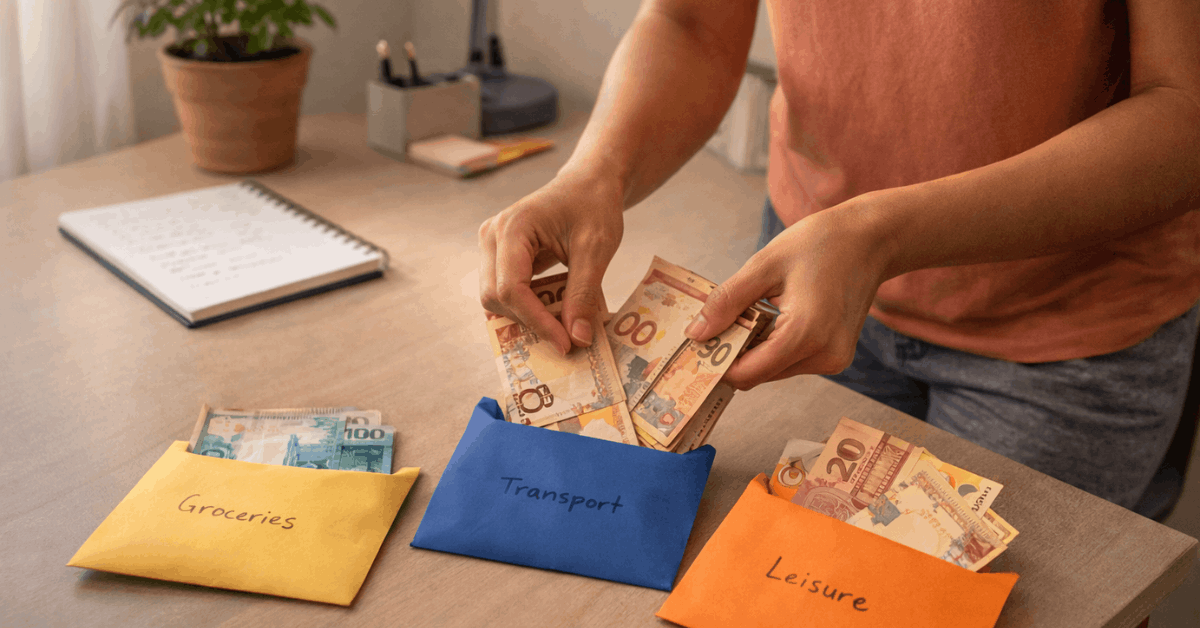
Some categories need a hard stop, not another reminder. The cash envelope system creates a stop. Pick two or three discretionary categories, like snacks, delivery, and small shopping. Decide the weekly amount, withdraw it, and spend only what’s inside the envelope.
Digital versions work too. Separate “spending” and “bills” balances across accounts can mimic envelopes, as long as transfers are limited and rules stay strict.
Cut Costs Without Feeling Punished
A good cut removes low-value spending. A bad cut removes every small joy, then backfires. Start with changes that protect energy and time.
- Cooking most meals helps because cooking at home beats delivery pricing almost every time, especially for lunch and weekday dinners.
- Streaming, apps, and memberships creep up quietly, so cancel unused subscriptions after scanning statements for three months of repeats.
- Bulk buying works best for staples that never spoil quickly, like rice, beans, pasta, cleaning supplies, and toiletries.
- Transport savings come through walking short routes, using public transit, or carpooling, plus planning errands in one loop.
- Secondhand shopping in brechós and local marketplaces stretches money on clothes, furniture, and household basics.
- Free entertainment counts. Parks, libraries, community events, and beach time reduce “weekend spending pressure.”
Lower Big Bills Using Brazil-Specific Tools And Programs
Major savings often come from programs, renegotiation, and fee removal. Brazil has several levers that matter more than any other coupon app.
Use Tarifa Social De Energía Elétrica If Eligible
Energy costs hit hard on low-income households. ANEEL regulated updated rules tied to Tarifa Social, including a shift that expanded benefits in 2025. Eligibility typically depends on CadÚnico registration and household income criteria, with special rules for families with medical needs that require electricity.
Tarifa Social is worth checking even when income sits near the limit, since registry status and household composition can change eligibility. A quick review at the utility level often confirms status and missing documentation.
Keep CadÚnico Updated For Bolsa Família And Related Support
CadÚnico acts as the gateway for several programs, including Bolsa Família. Government communications in 2025 reinforced the “regra de proteção,” allowing families whose income exceeds the entry threshold to remain in the program for a transition period, subject to specific limits.
Registry updates matter as much as eligibility. Household changes, address changes, and income shifts can affect benefits, so periodic updates reduce the risk of interruptions.
Remove Bank Fees Using The “Serviços Essenciais” Concept
Bank fees drain small balances fast. Banco Central do Brasil publishes the list of “serviços essenciais” that banks must offer free of charge within defined monthly limits for basic accounts. That matters for withdrawals, transfers, and account maintenance.
Switching to an account structure that avoids monthly maintenance fees can be a quiet win. Alerts for low balance and scheduled payments also prevent overdraft events that feel “random,” but usually follow a predictable pattern.
Use Pix To Control Spending, Not Accelerate It
Pix can reduce transfer costs and help avoid some card-related fees. Banco Central statistics also show Pix scale and growth, including record daily volumes reported in December 2025. That speed cuts both ways, since instant payments reduce the time to reconsider.
A spending control trick works well: move the weekly discretionary amount into a separate “Pix spending” balance, then stop refilling it until the next cycle. That keeps Pix useful while limiting damage.

Debt, Savings Automation, and Bill Negotiation
High-interest debt is a leak that never stops. Credit card revolving balances and high-interest installment loans usually deserve first priority, even ahead of larger savings goals. A simple rule helps: make minimum payments on everything, then apply any extra money only to the highest-interest balance until it’s gone.
Automation matters because saving “whatever is left” often becomes saving nothing. Schedule small transfers on payday or the day after. The amount can be tiny, but the timing must be consistent.
Bill reduction can also come through one uncomfortable phone call. negotiate bills for internet, mobile plans, insurance, and even rent renewals where possible. Providers often offer retention discounts, lower-priced plans, or bundled options that do not appear unless requested directly.
Goals, Emergency Fund, and Income Boosts That Fit Real Life
Goals create momentum because the effort has a reason. Short-term goals might include a basic buffer, debt payoff, or replacing a broken appliance without borrowing.
Stability First
Savings should start with stability first. Build an emergency fund at a starter level, such as one week of expenses, then one month, then more. A full three-to-six-month fund takes time, and that’s normal.
An “if/then” plan prevents setbacks from spiraling. If a surprise bill lands, then discretionary spending freezes for seven days, and grocery shopping shifts to the cheapest staples list. If income drops, subscriptions pause, and transportation shifts to walking and public transit.
Have Extra Income
Extra income helps when it’s low-cost and flexible. Side work can include delivery driving, babysitting, tutoring, weekend cleaning, reselling items, pet sitting, and simple digital services. The goal isn’t a perfect business plan; it’s a small, repeatable boost that doesn’t create new expenses or burnout.
Conclusion
Stability on a tight paycheck grows from structure, not luck. Saving money on a Low Income becomes realistic once tracking turns habits visible, fixed costs shrink through programs and fee removal, and a small buffer absorbs the next surprise.
Brazil’s tools, from Tarifa Social to Pix and CadÚnico-linked support, work best when paired with simple rules that limit impulse spending and protect essentials. Small, repeatable actions done weekly create momentum, and momentum reduces stress long before income changes.